Author: failedtechgeek2020@gmail.com

  • The 3‑Shoe Solution: Cover Every Occasion Without Overthinking

    There was a period in my life when I owned fifteen pairs of shoes. Fifteen. They took up the entire floor of my closet, gathered dust, made me feel like a collector instead of a functional human — and I still only ever wore two of them. The other thirteen were mistakes: shoes I bought for a single event, shoes that hurt after an hour, shoes that “might come back in style” but never did.

    I used to own fifteen pairs of shoes. That’s not a brag — it was exhausting. I had sneakers I never wore, dress shoes that pinched, and a pair of boots I’d bought for a hiking trip I never went on. One move to a smaller apartment forced me to downsize. I kept three pairs: a clean white sneaker, a brown chukka, and a weather‑proof boot. That was two years ago. I’ve never missed the other twelve, and my closet floor has never looked cleaner.

    The truth is, you don’t need a shoe rack. You don’t need a “rotation.” You need exactly three pairs of shoes — each one serving a distinct, non‑negotiable purpose. With these three, you will never need to buy another pair (except to replace a worn‑out favourite), and you’ll have the correct footwear for everything from a client meeting to a rainy Tuesday to a wedding reception.

    Below, I’m handing you the three shoes, how to pick the perfect pair in each category, the colours that match absolutely everything, where to buy them without stepping foot in a mall, and a budget planner so you don’t overspend.


    The 3 Shoes — And Why You Need Nothing Else

    Pair 1: The Everywhere White Sneaker

    What it does for you: Handles daily life. Works with jeans, chinos, shorts, even some casual suits. This is the shoe you wear 60–70% of the time.

    A clean, minimal white leather (or leather‑like) sneaker is the single most versatile piece of footwear a man can own. The “white” part matters — it signals cleanliness, intention, and an outfit that’s deliberate. The “leather” part matters because you can wipe mud, coffee, and life off them in ten seconds with a damp cloth. No mesh that turns grey after two wears. No giant logos that scream “skater teen.”

    What to look for:

    • Full‑grain leather or premium synthetic leather.
    • Rubber cupsole (comfortable, quiet, durable).
    • No visible branding or very subtle branding.
    • Slip‑on or lace‑up — your preference. Slip‑ons are even faster, eliminating the lace excuse.

    Top recommendations (all available online):

    • Cole Haan Grand Crosscourt (the gold standard for comfortable dressy sneakers).
    • Vans Ward (canvas option if you’re on a budget — but replace more often).
    • Thursday Boots Premier Low (if you want something a little more refined).
    • Allbirds Tree Runners (if you live in extreme heat and need breathable — swap white for light grey if pure white looks off).

    Colour: White. Not cream, not off‑white with a vintage sole. Clean, bright white. It matches navy, black, khaki, olive, grey — everything. One colour, infinite outfits.


    Pair 2: The “Dressed‑Up” Shoe That’s Secretly Comfortable

    What it does for you: Handles everything that’s “nicer than casual” — office days, dates, dinners, weddings, events where sneakers feel too young but dress shoes feel too stiff.

    Most dress shoes are a pain. They’re heavy. They click on floors. They take forever to break in. You don’t need that. You need a shoe that looks dressy but feels like a sneaker. Enter the comfort chukka boot, or a low‑profile leather derby with a rubber sole.

    What to look for:

    • Leather upper (brown, tan, or oxblood — not black unless you attend a lot of funerals).
    • Crepe or rubber sole (silent walking, all‑day comfort).
    • Chukka style or a plain‑toe derby — clean, minimal design.
    • Minimal break‑in period.

    Top recommendations:

    • Clarks Desert Boots (classic, crepe sole, under $100).
    • Thursday Boots Scout (slightly more refined, great for office).
    • Astorflex Greenflex (Italian, vegetable‑tanned, no glue, molds to your foot).
    • Cole Haan ØriginalGrand (sneaker comfort disguised as a wingtip — love it or hate it, but it’s undeniably easy).

    Colour: Dark brown or tan. Brown shoes pair beautifully with navy, khaki, charcoal, even olive. Avoid pure black — it’s too formal and doesn’t blend with the rest of a casual wardrobe unless you wear black jeans often.


    Pair 3: The Weather Warrior Boot

    What it does for you: Keeps your feet dry and warm in rain, slush, and cold — without making you look like you’re about to hike a mountain. This shoe steps up when the weather throws a tantrum.

    Sneakers soak through. Chukkas stain. You need one pair of boots that can handle puddles, cold snaps, and the kind of day where you leave the house and think, “I should have checked the forecast.”

    What to look for:

    • Waterproof or at least water‑resistant leather or treated material.
    • Rugged rubber sole with decent tread.
    • Insulated or roomy enough to wear with thick socks.
    • Ankle height — not a full logger boot, but enough coverage to keep snow and sleet out.

    Top recommendations:

    • Blundstone Classic 550 (pull‑on, unbreakable, goes with almost everything).
    • Red Wing Iron Ranger (an investment, but it’ll last a decade with care).
    • Thursday Boots Captain (weather‑resistant leather, dressy enough for the office).
    • LL Bean Bean Boots (for true slush and rain — iconic, if a bit preppy).

    Colour: Dark brown, rustic brown, or black. A dark, earthy tone covers mud well and looks intentional even when wet.


    Colours That Match With Everything

    If you follow these three pair choices, your shoe colour palette becomes effortlessly complementary:

    • White sneaker → goes with every single colour you own.
    • Brown dress shoe/chukka → pairs with navy, khaki, charcoal, olive, burgundy, and even light grey.
    • Dark brown/black weather boot → grounds any outfit in darker months.

    You never have a “what shoes do I wear with these pants” crisis because the answer is always immediate.


    Where to Buy Without Visiting a Mall

    All three pairs can be ordered from your couch using the same try‑on‑at‑home method we use for everything else:

    1. Open tabs for Zappos, Amazon Wardrobe, Nordstrom, or the brand’s direct website. Zappos is especially good because they stock all brands and have free returns.
    2. Order your usual size AND a half‑size up. Leather shoes stretch slightly, but you never want to guess wrong. Try both with the socks you intend to wear (thin for sneakers, slightly thicker for boots).
    3. Walk on carpet. Spend 15 minutes walking around your home. Don’t scuff the soles if you think you’ll return them. Pay attention to heel slip (a tiny bit is normal on boots and will settle; major slip means the wrong size).
    4. Keep the pair that feels like an extension of your foot. Return the other. Done.

    If measuring your foot correctly feels overwhelming, trace your foot on a piece of paper, measure the longest distance from heel to toe in centimetres, and use the brand’s size chart. Most good online stores have exact foot‑length guides.


    Budget Planner (Without Sacrificing Quality)

    Not everyone can drop a fortune, nor should they. Here’s a realistic budget breakdown:

    TierWhite SneakerDress Shoe/ChukkaWeather BootTotal
    Smart SaverVans Ward (~$65)Clarks Desert Boots (~$90)Blundstone 550 (~$190)~$345
    Comfortable Mid‑RangeCole Haan Grand Crosscourt (~$120)Thursday Boots Scout (~$160)Thursday Boots Captain (~$199)~$479
    Buy‑It‑For‑LifeThursday Boots Premier Low ($130)Astorflex Greenflex (~$170)Red Wing Iron Ranger (~$350)~$650

    No matter which tier you choose, three well‑chosen pairs will outlast ten random ones and cost less over time because you never buy another throwaway pair again.


    The Bottom Line: Stop Stockpiling Shoes That Stare at You

    Three shoes. That’s it. A clean white sneaker, a comfortable brown dress shoe, and a weather‑proof boot. Together, they cover your entire life — offices, dates, errands, travel, and storms. You’ll never make another impulse shoe purchase at a department store, and your closet floor will stop looking like a graveyard of abandoned mistakes.

    If you want the exact brand links in one printable PDF, grab the “One‑Click Wardrobe” cheat sheet below — it includes this 3‑shoe system plus the 10 clothing items that do 90% of the work.
  • Outfits That Flatter the Middle: How to Hide Belly Fat Without a Gym

    Let’s get one thing out of the way immediately: you don’t need a six‑pack to look good in clothes. The internet is packed with fitness influencers who’ll tell you otherwise, but a well‑chosen outfit can take visual pounds off your frame faster than any 30‑day ab challenge. I know this because I’ve been the guy standing sideways in the mirror, exhaling to see if a shirt suddenly fit better. It didn’t. The shirt was the problem — not my stomach.

    After I turned 35, I noticed my favourite button‑down shirts didn’t drape the same way. They pulled at the middle button and made me self‑conscious in photos. For a while, I started wearing baggy hoodies to hide it — which only made me look bigger. Then a friend showed me how an open blazer and a darker shirt changed the entire silhouette. I wore that combination to a family dinner, and my own brother asked if I’d lost weight. I hadn’t. It was just the outfit.

    The goal isn’t to hide who you are. It’s to wear clothes that are so well‑cut that your middle stops being the first thing people notice. Below, I’m giving you the vertical line trick that tailors have used for decades, the pants that don’t pinch, how patterns and colours do optical work for you, the undershirts that genuinely help, and five complete outfits you can build from the wardrobe you already have. No gym membership required.


    The Vertical Line Trick — Your Cheapest Tailor

    The human eye moves along lines. If you give it a long, unbroken vertical line down your torso, you instantly look longer and leaner. Here’s how to create that line without a single stitch.

    The unbuttoned layer method
    Wear an open, unstructured layer over a darker tee or shirt. Think: an unlined blazer, a lightweight overshirt, a zip‑up fleece, or a clean bomber jacket left open. The open front creates two parallel vertical lines that draw the eye up and down, not side to side. This single trick does more work than 50 sit‑ups.

    Avoid horizontal cut‑offs
    A belt that contrasts sharply with your pants chops your body in half and widens the middle. A tight‑fitting tee with a wide horizontal stripe does the same. Don’t put a bright neon horizontal sign across the part of your body you’re trying to minimize.

    Use an undershirt to smooth, not squeeze
    A tight undershirt that rolls up your belly is doing the opposite of what you want. Instead, use a lightweight, slightly longer undershirt with a bit of compression — nothing punishing, just enough to keep a smooth line under a button‑up. The Tommy John Second Skin or a Uniqlo AIRism undershirt in a larger size than your top layer can work wonders.


    Pants That Don’t Pinch (Rise, Pleats, Stretch)

    If your trousers are uncomfortable by 11 a.m., you’re wearing the wrong rise. This is where most guys go wrong.

    Rise is non‑negotiable
    Low‑rise pants sit below your belly, creating a spill‑over effect you don’t want. You need a mid‑rise or high‑rise trouser that sits at your natural waist — that’s about an inch below your belly button, not down on your hips. A higher rise holds everything in place and lengthens your legs.

    Flat front or a single pleat
    Flat‑front chinos are clean and modern, but a single forward pleat can give you a little extra room without looking like a 1950s banker. Bonobos makes an athletic‑fit chino with just enough space; Lululemon’s ABC pants have the right rise and hidden stretch. Avoid double pleats — they add visual bulk unless tailored perfectly.

    Stretch fabrics are your friend
    A 2% elastane blend in cotton means you can sit, bend, and breathe without the fabric fighting you. It also means the pant drapes instead of pulling horizontally across your lap. Never buy pants that are tight in the seat or thigh — you’ll see pulling lines instantly.


    Colour & Pattern Optics — Dark vs. Light Placement

    Light colours advance. Dark colours recede. It’s the oldest trick in the book, and it works because it’s based on physics, not fashion.

    The rule: Put darker colours on the areas you want to minimize and lighter or brighter colours where you want to draw attention. For most men, that means:

    • Darker tops: Navy, charcoal, olive, deep burgundy. These pull the eye upward to your face and minimize the midsection.
    • Darker trousers: Dark indigo denim, charcoal chinos. These keep a clean, unbroken lower half.
    • Use colour up top: That olive chore coat or navy sweater becomes your focal point. People notice your chest and face before they ever register your waist.

    Patterns that help
    Tiny, low‑contrast patterns (micro‑checks, fine herringbone, a subtle dark stripe) work well. Avoid large, bold patterns across your stomach — a big plaid or giant gingham on a shirt emphasizes width. Also avoid glossy fabrics; they catch light and highlight every curve. Stick to matte finishes in cotton, wool, and brushed flannel.


    The Best Undershirts & Shapewear That No One Will See

    I’m mentioning this because someone has to. If you’re wearing a dress shirt to a wedding or an event and you want to feel absolutely dialled in, a compression undershirt or light shapewear tank can be a quiet confidence booster. This isn’t about changing who you are — it’s about feeling good in your clothes.

    What to look for:

    • A tank or short‑sleeve compression shirt with medium support (not “extra firm”).
    • Cotton‑modal blends that breathe, so you don’t overheat.
    • Brands like Underworks (men’s compression tanks), Tommy John, or even Spanx for Men — nobody knows you’re wearing it, and it gives a smooth base under a button‑up.

    Rule of thumb: If you can’t forget you’re wearing it within five minutes, it’s too tight. Size up. The goal is smooth, not suffocated.


    5 Outfits That Immediately Slim the Torso

    Here’s the usable stuff. Five outfits you can put together this week, using the principles above.

    1. The Everyday Vertical

    • Dark navy or charcoal tee (not black — black can look stark and make you look like a bouncer, which invites more body awareness).
    • Open olive or sand‑coloured chore coat / overshirt.
    • Dark indigo stretch jeans.
    • White leather sneakers.
      The entire middle is de‑emphasized. All you see is a clean, put‑together silhouette.

    2. The Office Slimmer

    • Light blue Oxford shirt (leave the top button undone, which draws eyes upward to your face).
    • Navy unstructured blazer, worn open.
    • Mid‑rise charcoal chinos.
    • Brown chukka boots.
      The blazer’s open front creates two long vertical lines; the dark trousers elongate your lower half.

    3. The Weekend Layer

    • Grey merino crewneck sweater (slightly relaxed, not tight).
    • Dark wash athletic‑fit jeans.
    • Lightweight bomber jacket, unzipped.
    • Dark sneakers.
      The sweater’s clean surface and dark tone slim the torso; the open bomber adds verticality.

    4. The “I’m Going Out” Monochrome

    • Black or charcoal slim‑fit henley (three‑button, which draws eyes upward).
    • Dark charcoal chinos.
    • Clean black leather low‑top sneakers or black chukkas.
      Monochrome dark dressing is a cheat code — it makes you look like one long, lean column.

    5. The Summer Smart Casual

    • A linen or cotton popover shirt in a dark colour (navy or olive), worn untucked but not too long — hem should end around the mid‑fly.
    • Lightweight khaki chinos with stretch.
    • Brown leather sandals or slip‑on loafers.
    • Roll the sleeves to just below the elbow to draw attention to your forearms, which are always leaner.
      Summer hides nothing, but a dark top in a breathable fabric keeps the focus upward.

    You’re Not Hiding — You’re Dressing Smarter

    Clothes are supposed to make you feel like the best version of yourself. If you’ve spent years dreading getting dressed because nothing sits right, that’s not a body problem — it’s a fit problem. The vertical line trick, the right rise in your pants, colour placement, and a couple of outfit formulas can change your mirror reflection overnight.

    Take these five outfits. Pick the one that feels easiest. Wear it tomorrow. Notice that nobody’s looking at your stomach — they’re just seeing a guy who looks like he’s got his life together.


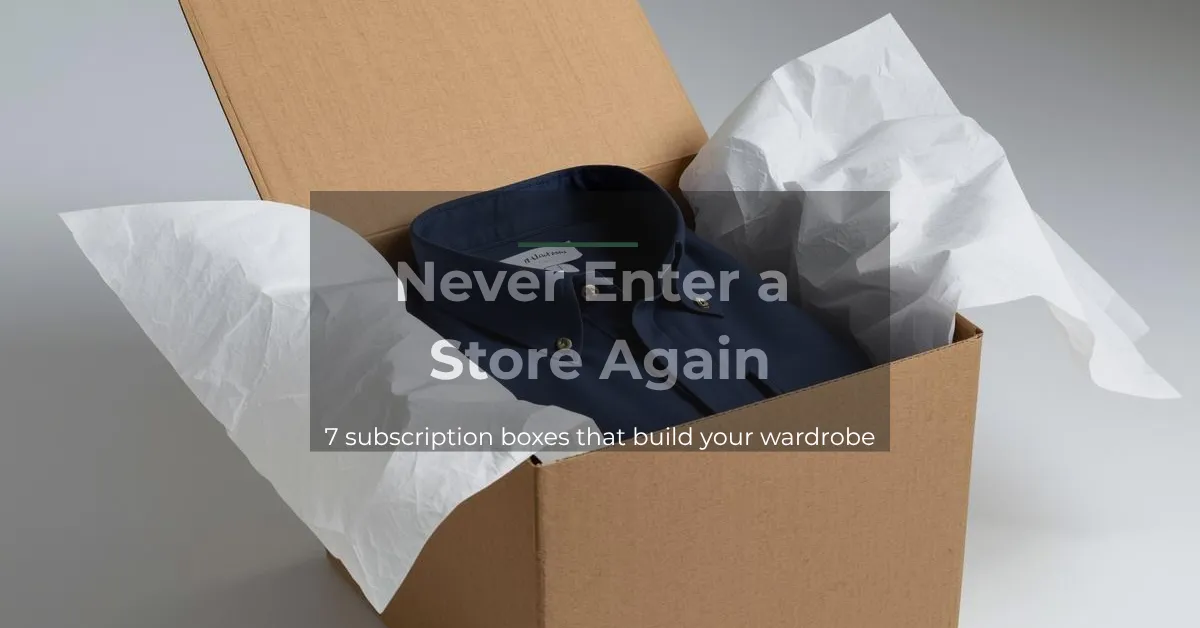
  • Never Enter a Store Again: 7 Subscription Boxes That Build Your Wardrobe

    Never Enter a Store Again: 7 Subscription Boxes That Build Your Wardrobe

    There’s a particular kind of dread that hits when you realize you need new clothes. You know you can’t avoid it forever. The elbows on your work shirt are thinning. Your jeans don’t quite button. But the thought of driving to a mall, walking into a store, talking to a salesperson, and standing half-dressed under fluorescent lights makes you want to cancel the whole thing and work from home forever.

    I once spent an entire Saturday driving to a mall, circling the parking lot for 20 minutes, and walking out with a single pair of chinos I wasn’t even sure fit. On the way home, I realized I’d lost four hours of my life for one pair of pants. A month later, a friend mentioned a clothing box he’d tried. I signed up out of pure frustration. The first box arrived on a Thursday. I tried everything on at home, kept a shirt and a jacket, and sent the rest back in a bag on my doorstep. I never went back to that mall.

    I discovered clothing subscription boxes by accident, and I haven’t willingly walked into a clothing store since. Here’s the model: a stylist picks items based on your size, preferences, and needs, ships them to your door, and you try everything on at home. You keep what you like, return the rest in a prepaid bag, and go on with your life. It’s the closest thing to having someone do your shopping for you while you stay horizontal on the couch.

    But not all boxes are equal. Some send nonsense you’d never wear. Others actually nail fit and style. I’ve tested the top ones — including keeping spreadsheets like a madman — to save you the time, returns, and fashion disasters. Below are the seven boxes that are genuinely worth your time if you hate shopping more than root canals.


    1. Stitch Fix Men — Best for Hands‑Off Style

    Stitch Fix is the entry point for most guys. You fill out a detailed style profile (body type, sizes, preferences, budget), and a stylist sends you five items. You can tell them exactly what you need — “I need business casual shirts for a new job” or “I have a beach wedding in June, help.” The more specific you are, the better the fix.

    Why it works for shopping‑haters:

    • Zero browsing. You literally don’t open a catalog.
    • Scheduled deliveries (every month, every season, or on‑demand).
    • You can leave detailed notes and even share a Pinterest board of styles you like.
    • Free shipping both ways. You only pay a $20 styling fee per order, which is credited toward anything you keep. If you keep all five items, you get a 25% discount — built‑in incentive.

    Best for: The guy who wants someone else to make every decision and just wants a box of clothes to show up.


    2. Amazon Personal Shopper — Cheapest Way to Start

    If you already have Amazon Prime, this one is a no‑brainer. For $4.99 a month, you get access to Amazon’s personal styling service. You complete a style quiz, and a stylist picks up to eight clothing items per shipment from Amazon’s massive catalog. The selection leans heavily on Amazon’s own brands (like Goodthreads, Amazon Essentials), which are surprisingly decent for basics — and the prices reflect it.

    Why it works:

    • Cheapest styling fee in the game — $4.99 per order, refunded if you keep anything.
    • Huge inventory of basics. If you just need solid tees, chinos, and Oxfords, this is where you build a cheap capsule.
    • Try‑before‑you‑buy model: seven‑day try‑on window, no charge until you decide.
    • Free returns via drop‑off at any UPS or Kohl’s.

    Best for: The budget‑conscious guy who wants to build a foundational wardrobe for as little money and effort as possible.


    3. Wantable — If You Want Edgier Without the Search

    Wantable is for the guy who looks at Stitch Fix and thinks, “I don’t want to look like everyone else at the office.” They lean a little more fashion‑forward but without the run‑way absurdity. Think well‑fitting henleys in interesting textures, dark‑wash jeans that actually fit thick thighs, and jackets that look modern but not like you tried too hard.

    Why it works:

    • Edits are curated to your specific body type — they ask detailed questions.
    • You can request entire outfits, not just individual pieces.
    • Their “stream” feature lets you review and approve items before they ship, so you never get surprised by a neon green shirt.
    • Styling fee is $20, credited toward purchase.

    Best for: The guy who wants to look current and a little sharper than your average polo‑and‑khaki drone, without any browsing time.


    4. Trendy Butler — For the Guy Who Wants Surprises

    Trendy Butler has a different model: they send you an entire “box” of clothes (usually 2–3 items) every month, and you’re charged a flat membership fee of around $65/month. You don’t pay per item — you essentially subscribe to a wardrobe. The items are their own in‑house brand, so the quality can be hit or miss, but the value proposition is interesting: you keep everything.

    Why it works:

    • No styling fees, no per‑item decisions. Pay the flat fee, get clothes.
    • Items are unbranded, clean, modern basics.
    • If you truly never want to think about clothes again, this just drip‑feeds new pieces into your closet.

    Best for: The guy who literally cannot be bothered to pick anything out and would be happy to have a wardrobe that builds itself in the background like a Spotify playlist.


    5. Bombfell — Best for Big & Tall / Specific Fits

    Bombfell has carved out a solid reputation for fitting guys who don’t fit standard sizes. If you’re tall, big, athletic, or just have a build that makes off‑the‑rack clothes pull and pinch, Bombfell is your best bet. Their stylists work with waist sizes up to 48, shirts up to 4XL, and are comfortable with true athletic builds (broad shoulders, narrow waist).

    Why it works:

    • Stylists actually understand fit, not just fashion. They’ll send you items cut for a broader chest or longer torso.
    • You get five pieces per shipment, and you can specify the occasion — work, weekend, date night.
    • Styling fee $25, credited toward purchase.
    • You can request a specific stylist and build a relationship so they learn your quirks.

    Best for: Bigger, taller, or athletically built men who have given up on standard sizing and want clothes that finally fit without tailoring.


    6. UrbaneBox — Budget‑Friendly with No Commitment

    UrbaneBox is one of the most affordable subscription boxes on the market. For a flat monthly membership of around $75, you receive two complete outfits (shirt + pants or shorts + accessories). That’s four to five items per box. The styling is done by actual people based on your profile, and they use a wide network of brands, many direct‑to‑consumer.

    Why it works:

    • Very low cost per item — often works out to under $20 per piece.
    • You can cancel or pause anytime, no lock‑in.
    • They’re generous with accessories (belts, sunglasses, watches) which round out outfits.
    • A good way to quickly fill gaps in a wardrobe without spending a day at the outlets.

    Best for: The guy on a tight budget who still wants a reliable source of coordinated outfits without hunting for sales.


    7. Basic Man — The Subscription for Pure Essentials

    Basic Man is brilliantly, defiantly minimalist. They sell one type of product — ultra‑thin, comfortable essentials for the guy who just wants to be covered. Their original box includes plain tees, socks, and underwear, replaced and shipped on a schedule. They’ve since expanded to basics like joggers and hoodies.

    Why it works:

    • No styling required. You set your sizes and replacement frequency, and you forget about it.
    • The tees are designed to be worn under shirts or alone and have a great fit.
    • Solve a real, recurring problem: replacing basics before they get embarrassing.
    • Simple, clean aesthetic — nothing loud, nothing that screams “I subscribe to a clothing box.”

    Best for: The guy who already has a decent wardrobe but wants to automate the boring stuff — tees, socks, underwear — so he never has to think about them again.


    How to Give Feedback So They Nail It Every Time

    The first box is almost never perfect. That’s by design. The real magic happens on boxes two and three, after you’ve given brutally honest feedback. Here’s how to do it right:

    • Be specific about fit. Instead of “this shirt was too big,” say “the collar was loose, sleeves too long, fabric billowed around my stomach.” The more precise, the better they adjust.
    • Mention what you actually wear. If you work from home, tell them you need comfortable but put‑together casual clothes, not dress shirts. If you have a date night, say it. Stylists aren’t mind readers.
    • Keep what flatters you, even if it’s outside your comfort zone. If you always buy grey but the navy jacket looks great on you, keep it. Let the data shape your wardrobe.
    • Don’t accept a bad box and seethe. Most services let you give feedback per item. Use it. If a box is a complete miss, some will even waive styling fees on the next round.

    Two or three boxes in, with consistent feedback, your stylist will know your body better than you do. Then it’s truly a passive wardrobe‑building machine.


    Stop Shopping. Start Receiving.

    You aren’t a man who shops. You’re a man who owns a wardrobe that works. These seven services remove every friction point between you and a closet full of clothes that fit, match, and require zero mall exposure. Pick one based on your budget and how much control you want to keep, sign up, and let the clothes come to you.

    The worst case: you try one box, send it all back, and you’re out a few bucks in styling fees. The best case: you build a complete, well‑fitted wardrobe without ever parking at a mall again.

    Take the 10‑minute quiz in your first profile. Be honest. Be specific. Then go back to your life. The clothes will arrive on Friday.

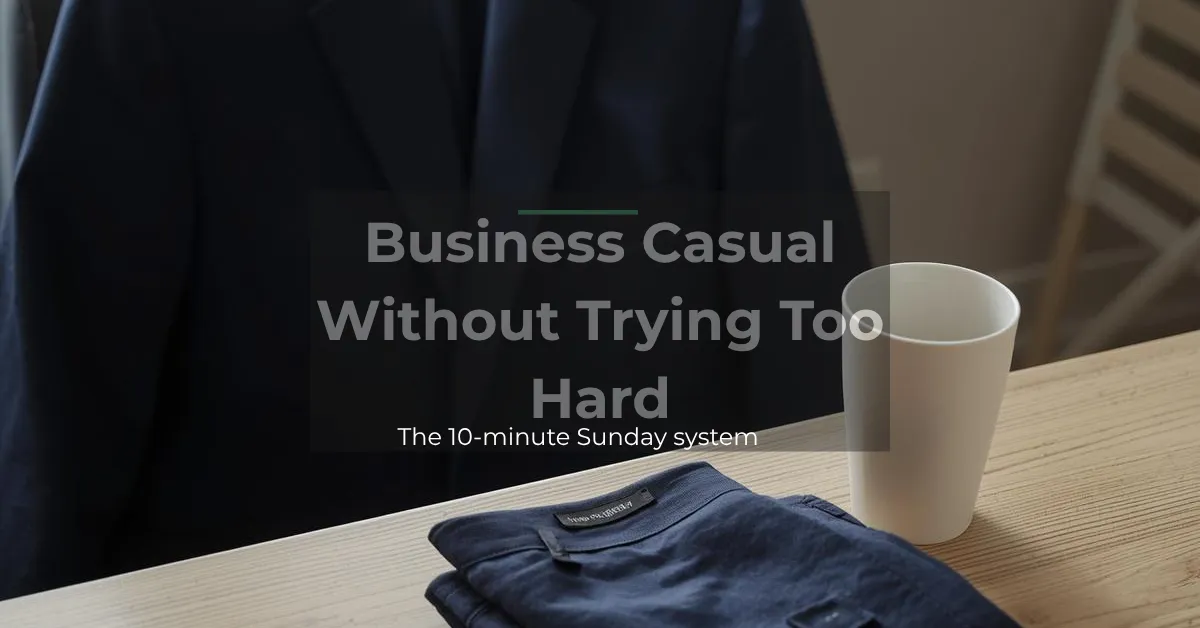
  • Business Casual Without Trying Too Hard (Men’s Office Outfits)

    Business Casual Without Trying Too Hard (Men’s Office Outfits)

    You know the drill. The office dress code says “business casual,” but nobody actually defines what that means. Some guys show up in full suits and look awkward. Others push it too far with jeans and a faded polo and get side‑eye from the boss. You just want to show up, look professional, and not spend a single brain cell on it.

    A couple of years ago, I started a new job. The email said “business casual,” so on day one I wore khakis and a button‑down shirt. I walked in and found my boss in a full suit. My coworker was in jeans. By Wednesday, I’d worn the same blue shirt twice because I had no idea what the middle ground looked like. I spent the whole first week feeling either overdressed or sloppy. That weekend, I built a uniform — three shirts, two trousers, one blazer — and never guessed again.

    I’ve since cracked it. There’s a repeatable business casual system that takes zero thought, requires no ironing, and works for any office that doesn’t demand a tie. It’s not about owning a lot of clothes; it’s about owning the right clothes that all mix with each other. Below, I’m giving you the uniform, the “repeat without anyone noticing” trick, the shoes that feel like sneakers but pass as dress shoes, and a 10‑minute Sunday night lay‑out system that eliminates mornings forever.


    The 3‑Piece Core Uniform

    You don’t need a different outfit every day. You need one outfit formula that looks intentional and can be switched up with color variations. The core is three pieces:

    1. A simple button‑down shirt. Oxford cloth, solid color (white, light blue, or pale grey). No patterns, no contrast collars, no logos. The Oxford weave hides wrinkles better than poplin, so you can skip the iron.
    2. A pair of stretch chinos. A flat‑front, slim‑straight cut in navy, khaki, or charcoal. Make sure they have stretch — you’ll sit, walk, commute, and still look sharp.
    3. An unstructured blazer (or equivalent). Don’t think of it as a suit jacket. The unstructured blazer has no shoulder pads, no stiff lining, and fits like a cardigan. It instantly pulls your shirt and chinos together into a “put‑together” look. For warmer days or casual offices, a clean merino sweater can stand in for the blazer.

    Why this works: Solid colors and classic cuts mean nothing clashes. You can put on any shirt, any chinos, and any blazer from your closet, and you’ll look coordinated without thinking.


    The “Repeat Without Anyone Noticing” System

    Worried people will notice you wear the same outfit multiple times a week? They won’t. Because you aren’t wearing the same outfit — you’re wearing the formula. Here’s the rotation trick:

    • Get your chinos in 3 colors: navy, khaki, charcoal.
    • Get your Oxford shirts in 3 colors: white, light blue, pale grey.
    • Now you have 9 possible combinations without buying anything extra.

    On Sunday night, lay out your week like this:

    DayPantsShirtLayer
    MondayNavy chinosWhite OxfordNavy blazer
    TuesdayKhaki chinosLight blue OxfordGrey merino sweater
    WednesdayCharcoal chinosPale grey OxfordNavy blazer
    ThursdayNavy chinosLight blue OxfordGrey merino sweater
    FridayKhaki chinosWhite OxfordNavy blazer (or skip it)

    You’ve now spent 10 minutes and you’re dressed for five days. The colors are so neutral that nobody clocks the repetition. They just see a guy who consistently looks like he has his act together.


    Shoes That Feel Like Sneakers (But Pass for Dress Shoes)

    Dress shoes are a dealbreaker for many guys — stiff, loud, painful. But you can’t wear your gym sneakers to the office. The middle ground is a smart, minimal leather shoe that’s built on a sneaker sole or a cushioned insole. Look for these three qualities:

    1. Clean leather upper – white, brown, or dark brown.
    2. Rubber or crepe sole – quiet steps, comfortable all day.
    3. Simple silhouette – no broguing, no square toes, no giant logos.

    My go‑to recommendation is the Cole Haan Grand Crosscourt or a simple chukka boot with a rubber sole. Both go with chinos and an Oxford, and both feel like you’re wearing trainers. If you want zero laces, slip‑on loafers in a soft leather are the final boss of easy office footwear.

    The golden rule: Buy one pair in dark brown. It matches navy, khaki, and charcoal. One shoe does the whole week.


    The 10‑Minute Sunday Lay‑Out System

    This is the habit that makes everything else work. Every Sunday evening, before you go to bed, take 10 minutes and do this:

    1. Check the weather for the week ahead.
    2. Pick your pants, shirts, and layers using the rotation chart above. Adjust if it’s hot (swap blazer for a sweater) or cold (add a rain jacket or an undershirt).
    3. Hang the full outfits together on one side of your closet, or fold them on a shelf in order — Monday at the front, Friday at the back.
    4. Check your shoes – give your one office shoe a quick wipe so it’s fresh for Monday.

    Now every morning, you reach for the first set. No staring into the wardrobe abyss. No last‑minute panic. Just grab, dress, and go. You’ve effectively automated your mornings.


    What to Do If Your Office Is Ultra‑Casual

    If your workplace lets you wear jeans and a t‑shirt, you can still use a lighter version of this system:

    • Swap chinos for dark, clean‑cut denim (no rips, no fading).
    • Swap the Oxford for a high‑quality crew‑neck tee (our core wardrobe tees).
    • Keep the unstructured blazer ready for client days or important meetings — it instantly upgrades even a t‑shirt and jeans.

    The system scales up or down depending on the office culture. The goal is always the same: one less decision every morning.


    Stop Dressing for the Job You Don’t Want to Think About

    Business casual doesn’t have to be confusing, and it definitely doesn’t have to be a daily negotiation with your closet. Build the uniform. Set the rotation. Do the Sunday lay‑out. Then use all that saved mental energy on things that actually matter — your work, your family, or just sleeping an extra 20 minutes.


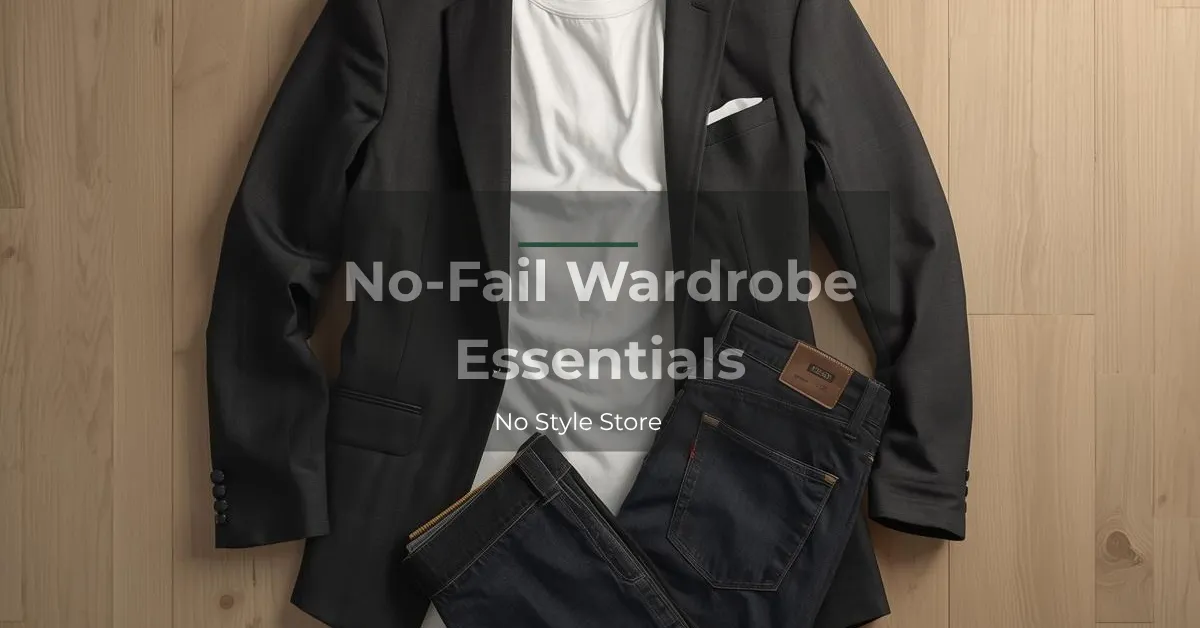
  • No-Fail Wardrobe Essentials for Men Who’d Rather Do Anything Than Shop

    No-Fail Wardrobe Essentials for Men Who’d Rather Do Anything Than Shop

    You know the feeling.

    You’re standing in front of a closet packed with clothes, and you still think, I have absolutely nothing to wear. You grab the same stretched-out tee and the same jeans that fit okay, and you walk out the door feeling like you’re failing at some invisible style test.

    When you hate shopping, this is the daily loop. Too many choices. None of them feel right. All of them require decisions you never asked to make.

    A few years ago, I stood in front of my closet at 7:45 a.m., already late, staring at racks of clothes I’d bought over years of half‑hearted mall trips. There were shirts I’d never worn, jeans that didn’t quite fit, and a blazer I’d bought because a salesperson told me it “looked great” — I’d never taken the tags off. I ended up grabbing the same grey hoodie I’d worn to a friend’s barbecue, two work calls, and a date that week. It was clean, but it was a surrender. That morning, I realized my closet wasn’t a resource — it was a museum of bad decisions. I didn’t need more clothes. I needed a smaller wardrobe that worked.

    The real problem isn’t you. It’s that nobody ever gave you a rulebook. So here it is.

    Minimalist wardrobe essentials don’t mean you own nothing. It means you own exactly the right things — and they all work together without a single second of deliberation. Below, I’m giving you the 10-item core that handles 90% of your life, exactly how to buy everything in a single afternoon (from your couch), a cheat sheet for fit so you never look sloppy, and the outfit formulas that remove your brain from the equation entirely.

    By the time you finish reading, you could close this tab, open a few browser windows, and have a complete, no-thought wardrobe on its way to your doorstep.


    The 10-Item Core That Handles 90% of Your Life

    These are not trends. They’re the pieces that never stop working. Buy them in this order, and you can stop reading any other clothing advice forever.

    1. Dark Wash Stretch Jeans

    The spine of your entire wardrobe. Dark indigo, no rips, no excessive fading. Stretch fabric means comfort. You can wear these with a tee, a sweater, or a blazer — they never look wrong. Get a slim-straight or athletic taper cut.

    2. Five Plain Crew-Neck Tees (White, Grey, Navy, Olive, Black)

    These go under everything or stand alone. When one collar sags, replace it. The secret: buy the same brand in multiple colors, and your mornings are already half solved. Thick cotton (like Uniqlo U) hides lumps and lasts longer.

    3. Two Crisp Oxford Shirts (White and Light Blue)

    Button-down collars, no iron required. Roll the sleeves up for casual; button it up for a date or an office that doesn’t require a tie. Oxford cloth hides wrinkles better than dress shirt poplin. Trust this.

    4. Two Pairs of Stretch Chinos (Khaki and Navy)

    These replace your sad khakis and any pair of trousers that makes you feel like a middle school principal. Flat front, slim but not skinny, stretch for movement. Wear them anywhere you’d normally wear jeans but want to look like you tried.

    5. The Everywhere White Sneaker (Leather or Leather-Like)

    Clean, minimal, zero giant logos. White sneakers go with denim, chinos, and even shorts. The leather ones can be wiped down in ten seconds. No mesh that turns grey after two wears.

    6. An Unstructured Blazer (Navy or Grey)

    Don’t think of it as a suit jacket. Think of it as a cardigan that makes every outfit look intentional. Soft shoulders, no padding, no stiffness. Throw it over a tee and chinos, and suddenly you’re the guy who “gets it.”

    7. Two Merino Wool Crew Sweaters (Charcoal and Camel)

    These replace hoodies when you need to look slightly more adult. Thin, breathable, no bulk. They layer under a jacket or work alone on a cool evening. Merino resists odor and wrinkles.

    8. A Lightweight Rain Jacket or Bomber

    Your weather shield. A bomber keeps the vibe casual; a clean rain jacket looks sharp and practical. Get one that fits at the hip and has no unnecessary zippers or military flair that you didn’t earn.

    9. Chukka Boots (Brown Leather or Suede)

    The shoe that bridges sneakers and dress shoes without being either. Minimal lacing, rubber sole for quiet walking. Wear them with jeans or chinos. They say “I care” without announcing it.

    10. No-Show Socks (10 Pairs) + One Leather Belt

    Match the belt to your shoes (brown belt with brown boots/sneakers, black with black if you ever wear it). No-show socks disappear inside sneakers and chukkas so you get the bare-ankle look without the blisters.

    That’s it. Ten line items. You now own a wardrobe that covers work lunches, date nights, weekend errands, and everything short of a courtroom.


    How to Buy Everything at Once Without Leaving Your Couch

    You will not visit a mall. You will not ask a salesperson anything. Here’s your Saturday morning battle plan, executed entirely from your screen:

    1. Open tabs for Bonobos, Uniqlo, Amazon Wardrobe, and Everlane. These brands cut specifically for normal guys, not 18-year-old runway models.
    2. For every item above, order your usual size AND one size up or down. Use “Try Before You Buy” or free returns. No guesswork. When the box arrives, try both sizes, keep the one that fits your actual body, and bag the other.
    3. Schedule delivery for Friday. That way, Saturday morning you spend 20 minutes in your own bedroom, with your own mirror, wearing your own jeans, deciding what stays.
    4. Return the rest. Print the label, drop the bag at a UPS or schedule a pickup. Done.
    5. Delete the shopping emails that follow. Unsubscribe from the promo blasts. You’re not a shopper anymore. You’re a man who owns a wardrobe.

    This entire process, from opening tabs to clicking “confirm order,” takes under 60 minutes. You’ll spend more time watching a movie that night. And when the boxes arrive, you’ll have everything you need for the next several years.


    Fit Cheat Sheet for Every Item (No Tailors or Guesswork)

    Fit is where most guys lose the plot. Not because their body is wrong, but because no one ever gave them the landmark rules. Print these and hold them up mentally when you try things on at home.

    • Tees and sweaters: Shoulder seam must hit exactly at the shoulder bone — not drooping down your arm, not pinching. The body should skim your chest and belly without hugging tight. Hem ends around mid-zipper area, not below your butt.
    • Oxford shirts: Top button closes without strangling you. Shoulders align at the bone. When tucked in, there’s no balloon of fabric pulling out. Sleeve cuffs end at your wrist bone.
    • Jeans and chinos: They should stay up without a belt (if not, the waist is too big). Thigh fits comfortably — you can pinch about an inch of fabric. The leg tapers slightly from knee to ankle, but don’t let it cling to your calves. No break or a slight break at the shoe; you don’t want fabric puddling.
    • Blazer: You can hug yourself without the back pulling. Sleeves end just below the wrist bone, showing a quarter-inch of shirt cuff. Shoulder pads are non-existent (unstructured). It should feel like a jacket, not a box.
    • Sneakers and boots: Your heel doesn’t slip out when walking. Toes don’t touch the front. One thumb’s width of space at the toe. If you’re between sizes, size up slightly and use a thin insole.

    Use these rules while standing in front of your own mirror, barefoot, with the clothes straight out of the box. You’ll identify the right size in under two minutes per item.


    Outfit Formulas That Remove All Thinking

    Now that you have the 10-item core, you don’t choose outfits. You use formulas. The clothes do the work.

    Daily Default (10 seconds)
    Dark jeans + grey/olive tee + white sneakers. Grab and go. Works for errands, casual office, playground, coffee run.

    Work Lunch / Business Casual
    Navy chinos + white Oxford + unstructured blazer + chukkas. You look like you tried — because the formula tries for you.

    Date Night
    Dark jeans + charcoal merino sweater + clean white sneakers. Comfortable, confident, no peacocking.

    Cold / Wet Day
    Add the bomber or rain jacket on top of any formula. Swap sneakers for chukkas if it’s slushy. Layer a tee under the sweater.

    Everything mixes with everything. You cannot clash. Every item is a neutral that works with every other item. The mental load is zero.


    Stop Shopping. Start Owning.

    You don’t need more clothes. You need a small, reliable system that gets you out the door looking like a man who has his life together — because he does. The 10 pieces above, bought in one focused online session, will carry you further than any wardrobe packed with random sale purchases ever will.

    Grab the free “One-Click Wardrobe” cheat sheet below if you want the exact brand links and a printable version of this list. Tape it to your wall. Use it to build your closet this weekend. Then reclaim all that brain capacity you’ve been wasting on “what should I wear.”